Role of Family Physicians in the Early Detection and Management of Pediatric Ocular Misalignment and Visual Acuity Disorders
Doi: 10.36351/pjo.v42i3.2379
DOI:
https://doi.org/10.36351/pjo.v42i3.2379Abstract
Purpose: To evaluate the knowledge, clinical practices, and referral approach of family physicians in Iraq regarding pediatric eye disorders, including ocular misalignments, amblyopia, and refractive errors, and to evaluate the adequacy of their training in managing these conditions.
Study Design: Cross sectional, observational study.
Place and duration of the study: Primary health care centers in Iraq, from March 2024 to March 2025
Methods: Atotal of 385 family physicians of different professional levels were enrolled in the study. They responded to a structured web-based questionnaire that addressed demographic data, clinical practice, management approaches, and self-assessment of ophthalmic training adequacy.
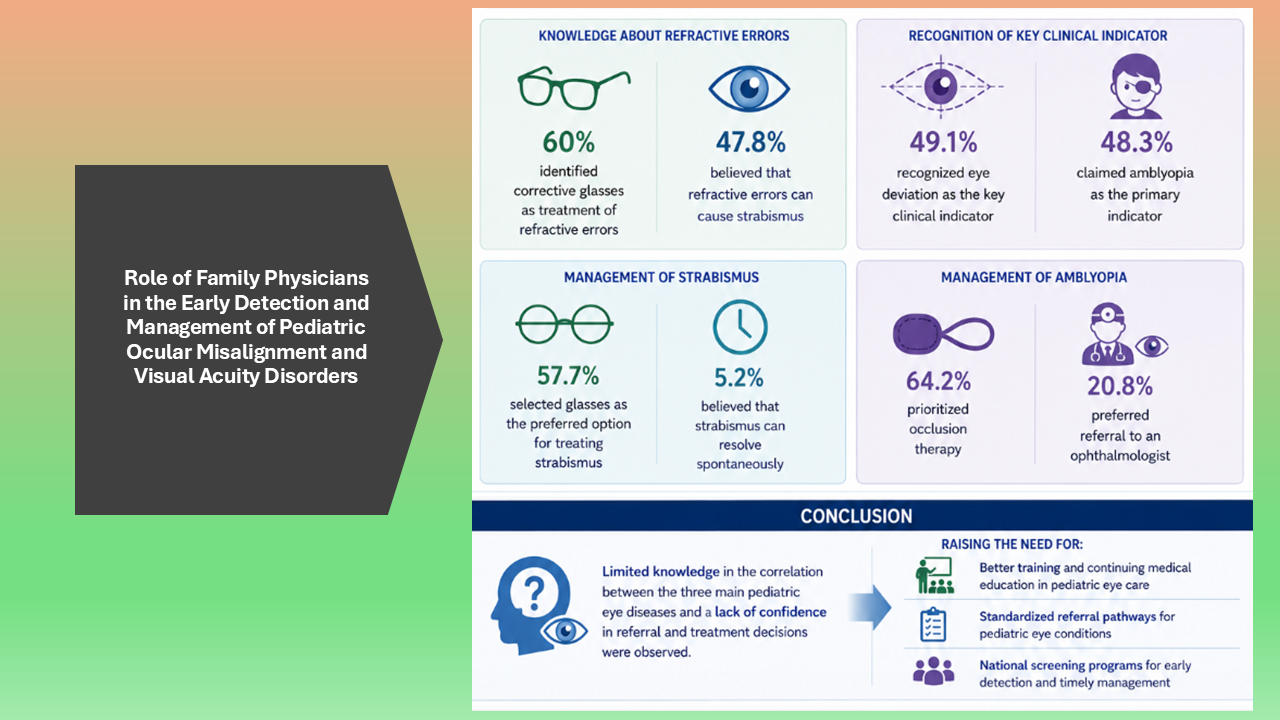
Results: There were 73.8% female, 55.3% medical 35.1% specialists, 35% residents and 9.7% consultants. Out of the total, 60% identified corrective glasses as treatment of refractive errors and 47.8% believed that refractive errorscan cause strabismus. Eye deviation was recognized as the key clinical indicator by 49.1% while 48.3% claimed amblyopia as the primary indicator. Glasses were selected by 57.7%as the preferred option for treating strabismus, while 5.2% believed that it can resolve spontaneously. For amblyopia, 64.2% prioritized occlusion therapy, yet only 20.8% preferred referral to an ophthalmologist.
Conclusion: Limited knowledge in the correlation between the three main pediatric eye diseases and a lack of confidence in referral and treatment decisions were observed raisingthe need for better training, confirming standardized referral pathways, and national screening programs.
Downloads
Published
How to Cite
Issue
Section
License
Copyright (c) 2026 Suzan

This work is licensed under a Creative Commons Attribution-NonCommercial 4.0 International License.