Comparison of the Effect of Cycloplegia on Ocular Biometric Parameters in Myopic and Hypermetropic Pakistani Children Using Lenstar
Doi: 10.36351/pjo.v42i3.2353
DOI:
https://doi.org/10.36351/pjo.v42i3.2353Abstract
Purpose: To evaluate the effect of cycloplegia on ocular biometric parameters in children with myopia and hypermetropia.
Study Design: Cross sectional study.
Place and Duration of Study: Institute of ophthalmology LUMHS Jamshoro from September 2024 to march2025.
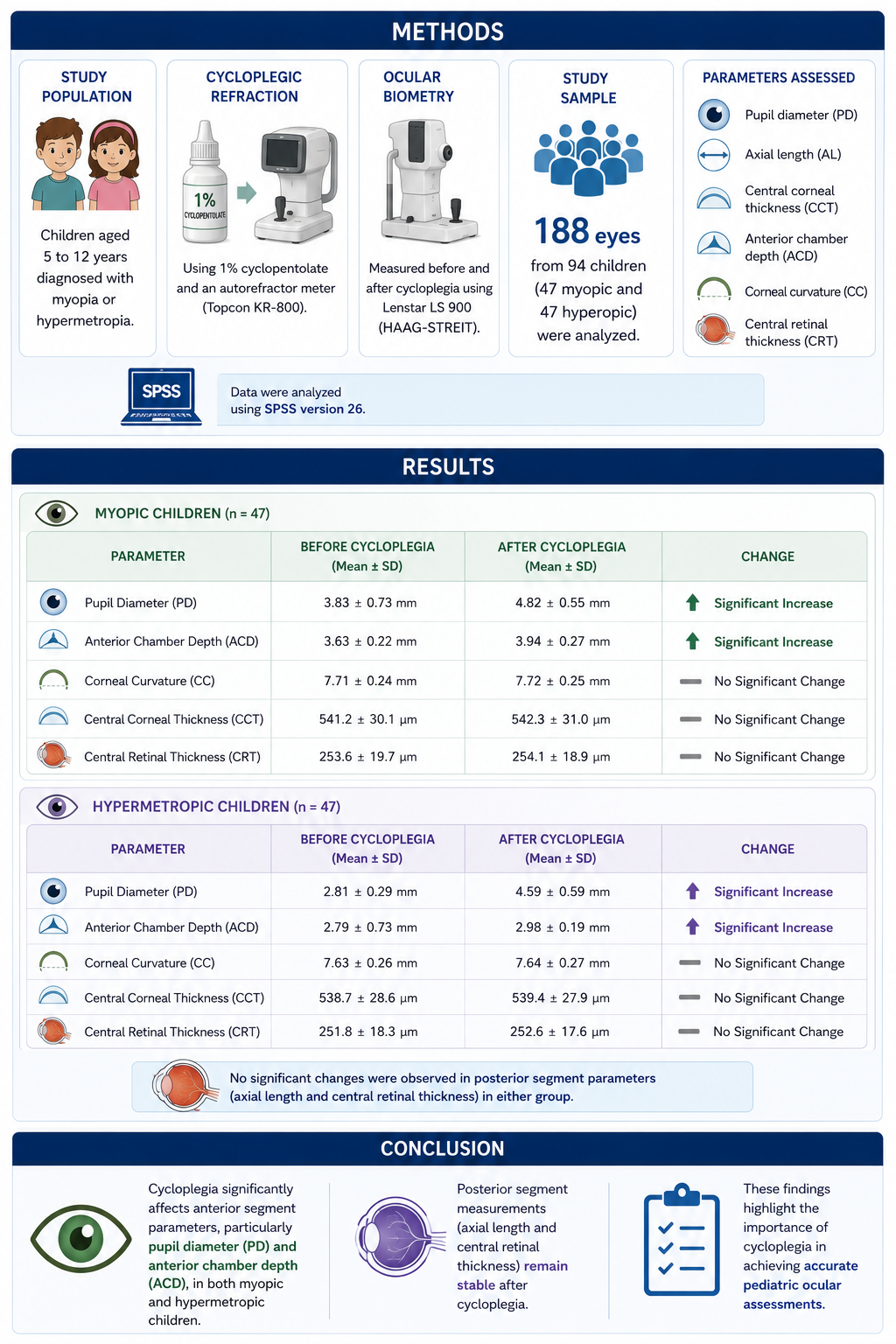
Methods: Thisstudy included children aged 5 to 12 years diagnosed with myopia or hypermetropia. Cycloplegic refraction was performed using 1% cyclopentolate and an autorefractor meter (Topcon KR-800). Ocular biometry measurements were obtained before and after cycloplegia using Lenstar LS 900 (HAAG-STREIT). A total of 188 eyes from 94 children (47 myopic and 47 hyperopic) were analyzed. Parameters assessed included pupil diameter (PD), axial length (AL), central corneal thickness (CCT), anterior chamber depth (ACD), corneal curvature (CC), and central retinal thickness (CRT). Data were analyzed using SPSS version 26.
Results: In myopic children, ACD increased from 3.63 ± 0.22 mm to 3.94 ± 0.27 mm, and PD increased from 3.83 ± 0.73 mm to 4.82 ± 0.55 mm after cycloplegia, while CC, CCT, and CRT remainedunchanged.In hypermetropic children, PD increased from 2.81 ± 0.29 mm to 4.59 ± 0.59 mm, and ACD increased from 2.79 ± 0.73 mm to 2.98 ± 0.19mm, with no significant changes observed in posterior segment parameters.
Conclusion: Cycloplegia significantly affects anterior segment parameters, particularly PD and ACD, in both myopic and hypermetropic children, while posterior segment measurements remain stable. These findings highlight the importance of cycloplegia in achieving accurate pediatric ocular assessments.
Downloads
Published
How to Cite
Issue
Section
License
Copyright (c) 2026 Aysha Khan

This work is licensed under a Creative Commons Attribution-NonCommercial 4.0 International License.