Appraisal of Eye-Care Professionals’ Knowledge, Practices, and Barriers Regarding Progressive Addition Lenses: A Cross-Sectional Survey
Doi: 10.36351/pjo.v42i2.2340
DOI:
https://doi.org/10.36351/pjo.v42i2.2340Abstract
Purpose: To determine how eye-care professionals (ECPs)view, prescribe, and handle progressive addition lenses (PALs), paying special attention to their clinical confidence, knowledge, practical difficulties, and need for ongoing education.
Study Design: Cross-sectional survey.
Place and Duration of Study:Department of Optometry,College of Applied Medical Sciences, Qassim University, Buraydah, Saudi Arabiafrom January 2025 to July 2025.
Methods: There were 212 registered ophthalmologists and optometrists who participated in the survey. While responses were summarized using descriptive analyses, relationships between knowledge, prescribing behavior, confidence, and training engagement were investigated using chi-square (χ²) testing, ordinal logistic regression, and k-means cluster analysis.
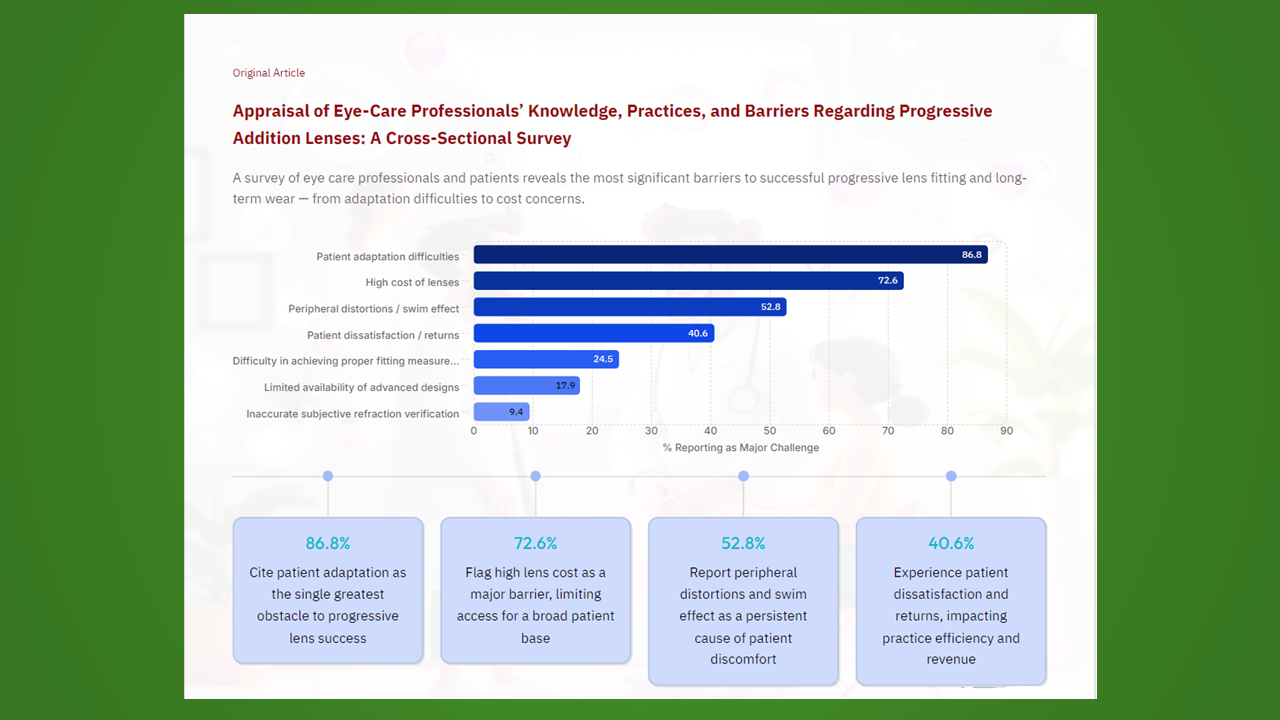
Results: Only 52.8% of respondents consistently measured all necessary biometric parameters during dispensing, even though 75% of respondents rated their knowledge of PALs as good or excellent. Longer clinical experience (≥15 years), increased participation in continuing education (≥10 hours annually), and access to digital centration technologies were all independently linked to higher prescribing confidence (52.8%). The most often mentioned barriers to PAL use were patient adaptation issues (86.8%) and lens cost (72.6%). Three different practitioner profiles were identified by cluster analysis: Occasional Prescribers (27.4%), Practical Generalists (43.4%), and Progressive Advocates (29.2%).
Conclusion: Although attitudes toward PALs are generally positive, there are still significant gaps between routine clinical implementation and perceived knowledge, especially when it comes to personalized fitting and biometric assessment. Increased access to digital dispensing tools and targeted continuing education could help convert current knowledge into more reliable prescribing procedures and better patient outcomes.
Downloads
Published
How to Cite
Issue
Section
License
Copyright (c) 2026 Abdelaziz Elmadina

This work is licensed under a Creative Commons Attribution-NonCommercial 4.0 International License.