Adoption, Challenges, and Future Prospects of Tele-optometry: A Comprehensive Review
Doi: 10.36351/pjo.v42i4.2299
DOI:
https://doi.org/10.36351/pjo.v42i4.2299Abstract
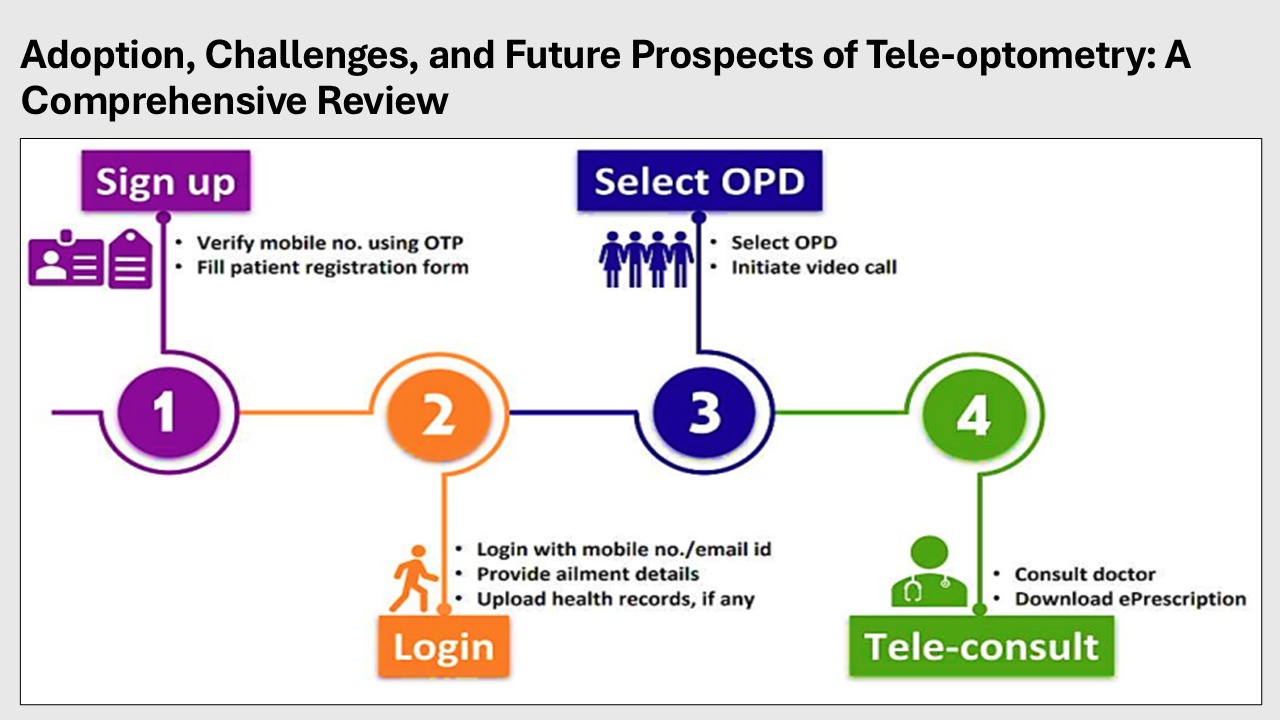
The ongoing problem of blindness and low vision affects India because rural areas lack sufficient access to eye care facilities. Tele-optometry involves the provision of eye care through communication media. People in remote regions with no access to eye care services show increasing demand for immediate medical attention which drives the growing acceptance of this solution. This review studies existing research on tele-optometry and teleophthalmology while examining three main topics which include adoption models, implementation frameworks and patient perceptions. The systematic search which followed PRISMA guidelines identified 24 open-access studies that Google Scholar, PubMed and ResearchGate published between 2014 and 2024. The operating capacity of tele-optometry depends on three essential requirements which include reliable digital infrastructure, secure data management and user acceptance by both clinicians and patients which enables early detection of eye conditions in while decreasing the number of preventable blindness and vision impairment cases.
Downloads
Published
How to Cite
Issue
Section
License
Copyright (c) 2026 Roshni Sengupta, Kritika Gautam, Tsering Lamu Shongmu

This work is licensed under a Creative Commons Attribution-NonCommercial 4.0 International License.