Evaluation of the Quality of YouTube Videos in Gonioscopy-Assisted Transluminal Trabeculotomy Surgery
Doi: 10.36351/pjo.v42i2.2284
DOI:
https://doi.org/10.36351/pjo.v42i2.2284Abstract
Purpose: To evaluate the educational quality and usefulness of YouTube videos as a resource in gonioscopy-assisted transluminal trabeculotomy (GATT) surgery.
Study Design: Descriptive observational.
Place and Duration of Study: Department of Ophthalmology, Izmir City Hospital, Turkey. The videos available until 26 June 2025 were included.
Methods: The first 50 YouTube videos found using the search term ‘gonioscopy-assisted transluminal trabeculotomy were included for the study. The steps of GATT surgery were scored (range:1–12) and standardised according to the literature. The videos were analysed using the Quality Criteria for Consumer Health Information (DISCERN) score(range:16–75), the Global Quality(GQ) score(range:0–5),and the Journal of the American Medical Association(JAMA) score (range:0–4).
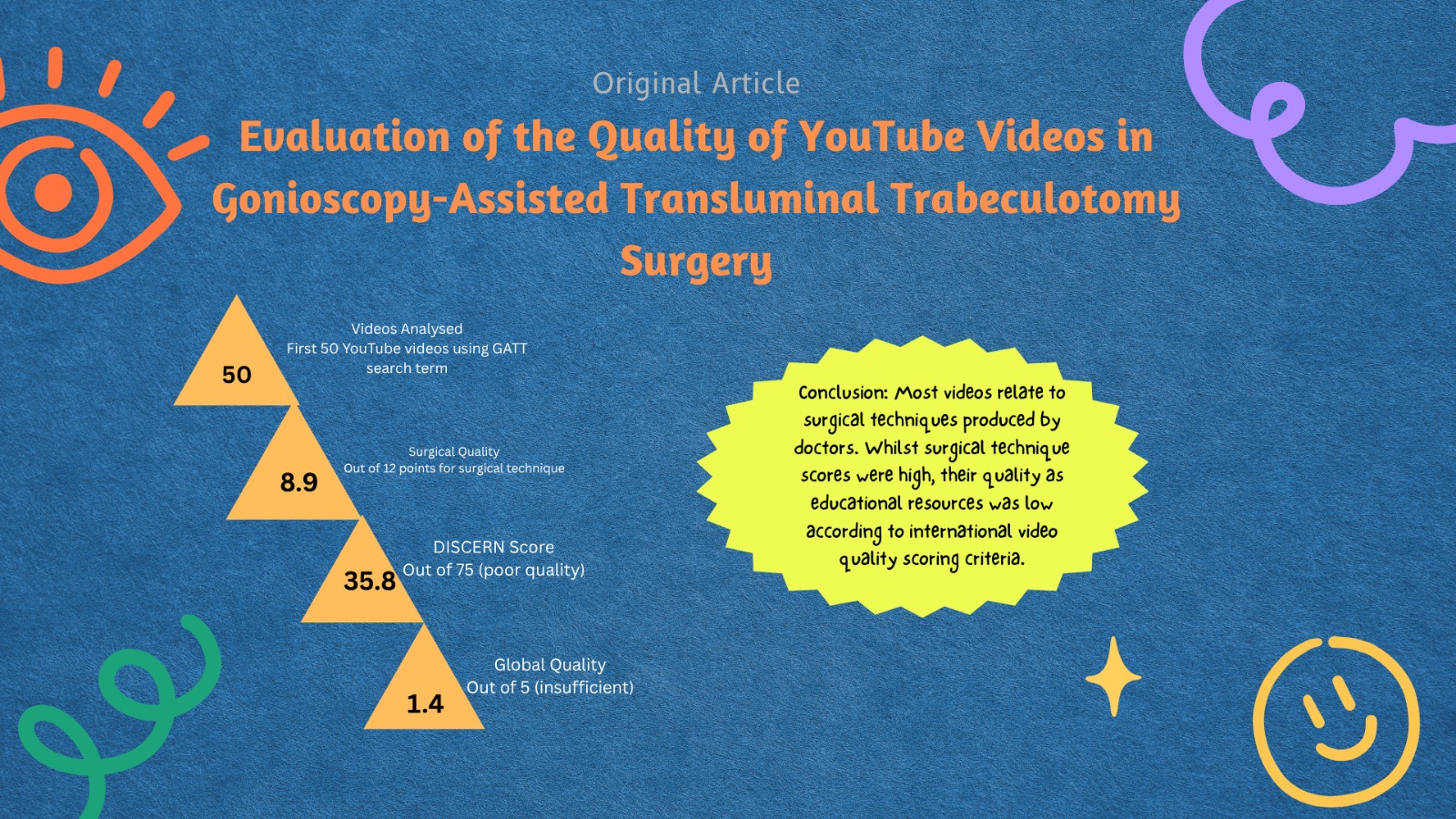
Results: The mean number of views(1910.6±3221.5),likes(21.7±29.4),dislikes(0.2±0.7), comments (1.5±2.1), video duration(278.5±233.1 seconds), time since upload(45.3±38.6 months), view rate(2.2±3.7),likes rate (98.7±4.5), video power index(2.2±3.7),and interaction index(0.00025±0.00026)were calculated. The mean surgical quality score of the videos was 8.9±2.2,the DISCERN score was 35.8±9.2 (poor quality), the GQ score was1.4±0.7(insufficient quality),and the JAMA score was 1.8±0.8 (moderate quality).
Conclusion: Most of the videos examined in this study relate to surgical techniques and were produced by doctors. Although the surgical score of the videos related to surgical technique was found to be high, their quality as a resource was low according to the video quality scoring criteria used worldwide.
Downloads
Published
How to Cite
Issue
Section
License
Copyright (c) 2026 Ramazan Birgul

This work is licensed under a Creative Commons Attribution-NonCommercial 4.0 International License.