Angioid Streaks with Choroidal Neovascularization: An Ophthalmic Window to the Diagnosis of Pseudoxanthoma Elasticum
Doi: 10.36351/pjo.v42i2.2259
DOI:
https://doi.org/10.36351/pjo.v42i2.2259Abstract
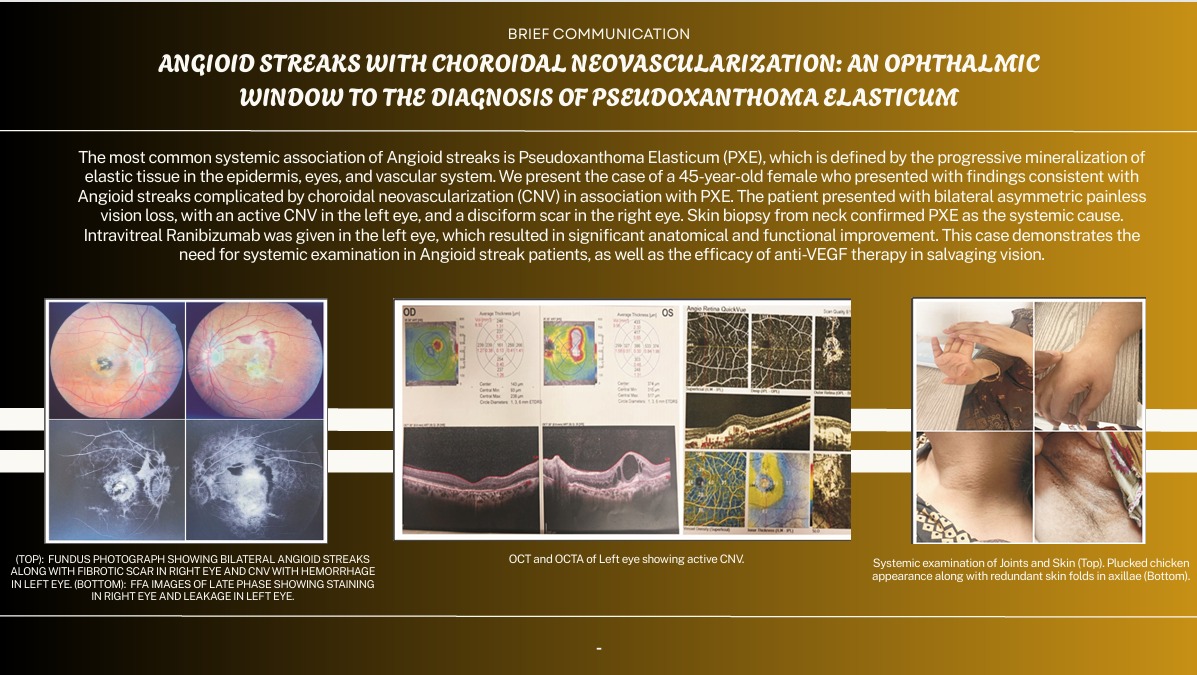
The most common systemic association of Angioid streaks is Pseudoxanthoma Elasticum (PXE), which is defined by the progressive mineralization of elastic tissue in the epidermis, eyes, and vascular system. We present the case of a 45-year-old female who presented with findings consistent with Angioid streaks complicated by choroidal neovascularization (CNV) in association with PXE. The patient presented with bilateral asymmetric painless vision loss, with an active CNV in the left eye, and a disciform scar in the right eye. Skin biopsy from neck confirmed PXE as the systemic cause. Intravitreal Ranibizumab was given in the left eye, which resulted in significant anatomical and functional improvement. This case demonstrates the need for systemic examination in Angioid streak patients, as well as the efficacy of anti-VEGF therapy in salvaging vision.
Downloads
Published
How to Cite
Issue
Section
License
Copyright (c) 2026 Ambreen Gull

This work is licensed under a Creative Commons Attribution-NonCommercial 4.0 International License.